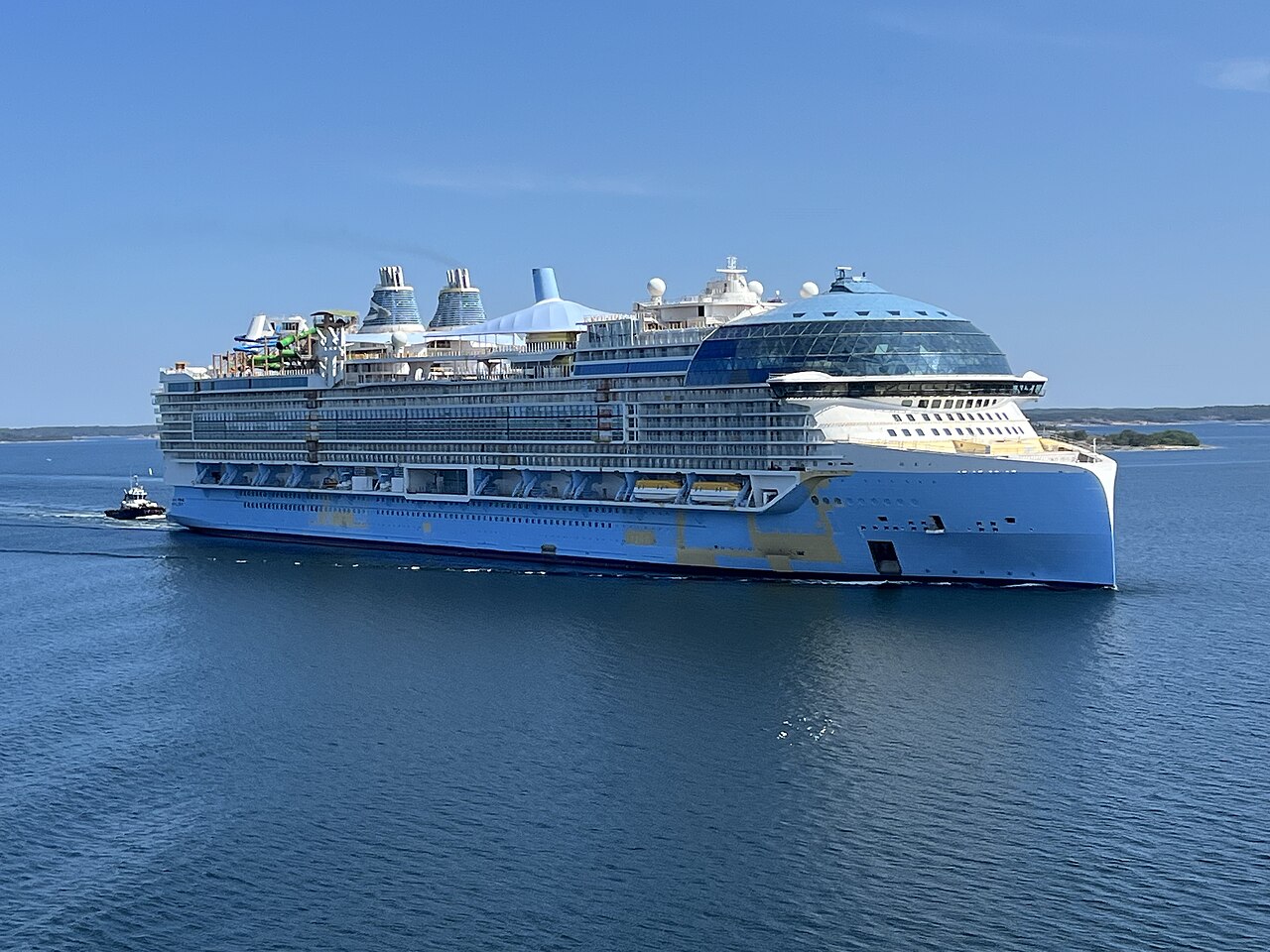
The vast, shimmering expanse of the ocean has always called to human ambition, but never before has that ambition been so grandly realized as with the arrival of the Icon of the Seas. This monumental vessel, a marvel of modern engineering and design, has redefined luxury and scale on the high seas, claiming the coveted title of the Größtes Kreuzfahrtschiff Der Welt – the world's largest cruise ship.
Since its highly anticipated debut on November 28, 2023, the Icon of the Seas has not just broken records; it has set new benchmarks for what a cruise vacation can be. It's the first ship in Royal Caribbean International's groundbreaking Icon-Class, a testament to the cruise line's relentless pursuit of innovation and grandeur. Its sister ship, the Star of the Seas, is set to join the fleet in 2025, solidifying the Icon-Class's dominance for years to come. This new era truly showcases how mega-liners continue to grow, becoming ever more spectacular and imaginative, captivating travelers worldwide.
The Reign of the Icon: A New Era for Ocean Travel
The Icon of the Seas didn't just inch past its predecessors; it soared over them, seizing the top spot across all key metrics: Gross Register Tonnage (BRZ), passenger capacity, and overall length. This colossal achievement has firmly placed it as the undeniable Größtes Kreuzfahrtschiff Der Welt. Its entry into service officially dethroned the magnificent Wonder of the Seas, an Oasis-Class vessel that had previously held the title, continuing Royal Caribbean's long-standing tradition of leading the industry in sheer size and scale.
What does it mean to be the Icon of the Seas? It means experiencing an unprecedented array of amenities and entertainment zones designed to cater to every conceivable preference. While specific details on every single feature might vary, passengers can expect state-of-the-art water parks, diverse dining experiences spanning global cuisines, innovative entertainment districts, and luxurious accommodation options that push the boundaries of onboard comfort. Royal Caribbean’s Icon-Class vessels are engineered not just for size but for creating distinct "neighborhoods" on the ship, offering varied ambiances and activities, ensuring that even on the world's largest ship, every guest can find their perfect corner of paradise. This focus on distinct zones helps manage the vast numbers of people, creating a more intimate and personalized feel despite the ship's enormous capacity.
Royal Caribbean's Legacy: A History of Dominance
The story of the Größtes Kreuzfahrtschiff Der Welt isn't just about the Icon; it's a narrative woven through Royal Caribbean International's history since 2009. For over a decade, the cruise line's pioneering Oasis-Class ships consistently held the top position, each new iteration slightly surpassing the last. This impressive lineage began with the Oasis of the Seas and Allure of the Seas, which first stunned the world with their sheer size and groundbreaking features like the Central Park and Boardwalk neighborhoods.
The progression continued with the Harmony of the Seas, followed by the Symphony of the Seas, which boasted an increased passenger capacity of 5,518 (double occupancy) and a Gross Register Tonnage of 228,081. Each vessel incrementally pushed the boundaries of what was thought possible at sea. Most recently, the Wonder of the Seas, with its slightly higher tonnage and capacity for 5,734 passengers (double occupancy) through 216 additional beds, proudly wore the crown before the Icon's arrival. Even the 2024 debut of the Utopia of the Seas, while incredibly impressive, remained just shy of the Wonder of the Seas in scale. This consistent push to innovate and build bigger, grander ships highlights Royal Caribbean's Reign: Building the World's Largest Vessels and their unwavering commitment to defining the future of cruising.
Beyond Royal Caribbean: The Global Race for Grandeur
While Royal Caribbean has largely dominated the top spots, the race to build the Größtes Kreuzfahrtschiff Der Welt, or at least one of the largest, is a dynamic and competitive one, involving several other major cruise lines that are constantly innovating and expanding their fleets. The industry consistently sees new entrants and impressive vessels vying for recognition.
MSC Cruises, for instance, has made significant strides in recent years. With the launch of the MSC World Europa in autumn 2022, they impressively climbed the rankings. Boasting a Gross Register Tonnage of 215,863, the MSC World Europa positioned itself just behind Royal Caribbean's Oasis-Class ships, pushing out contenders like AIDAnova and AIDAcosma. MSC also has its formidable Meraviglia and Meraviglia Plus classes, which are among the largest, closely following the LNG-powered ships from Carnival brands.
Further reshaping the top-tier list is the Disney Adventure, originally conceptualized as the Global Dream. This ship has since displaced other notable vessels like AIDAnova, AIDAcosma, Costa Smeralda, and Costa Toscana from the top-10, showcasing Disney's commitment to grandeur in the cruise world. AIDAnova itself was a trailblazer, being the first cruise ship to operate consistently using Liquefied Natural Gas (LNG) as fuel, a significant step towards more sustainable cruising. This architectural platform is also shared by new vessels from Carnival Cruise Line, P&O Cruises, and soon Princess Cruises, indicating a broader industry shift towards cleaner energy. These developments demonstrate a vibrant, competitive landscape where innovation in size, amenities, and environmental responsibility continues to drive the industry forward.
Understanding "Largest": Metrics and the Megaship Experience
Defining what constitutes the "largest" cruise ship can be more complex than it appears at first glance. While many ships claim superlatives, the most commonly accepted measure for comparing cruise ship size is Gross Register Tonnage (BRZ), often simply referred to as tonnage. This metric represents the ship's internal volume, with one BRZ unit equating to 100 cubic feet of enclosed space. Although BRZ provides a consistent benchmark, it's an abstract figure that doesn't immediately convey the ship's physical dimensions or capacity to the average person.
Other metrics, such as length and passenger capacity (especially double occupancy or total guest capacity), also play a significant role in public perception and ranking. The Icon of the Seas distinguishes itself by leading across all these categories, truly earning its status as the Größtes Kreuzfahrtschiff Der Welt. For a detailed comparison of the top contenders, be sure to check out our Top Ranking 2024: Discover the Biggest Cruise Ships on Earth.
But what does sailing on the world's largest cruise ship truly mean for the passenger? It means unparalleled choice. From multiple pools and water slides to diverse dining venues, Broadway-style shows, ice skating rinks, and even simulated surfing, these mega-ships are floating cities designed to offer something for everyone. This extensive array of options can lead to a highly personalized experience, allowing guests to tailor their vacation to their exact preferences.
However, the sheer size also brings considerations. While these ships are engineered to disperse crowds effectively with their multi-deck layouts and distinct zones, peak times and popular attractions can still feel bustling. Savvy travelers often benefit from utilizing onboard apps to make reservations, check schedules, and navigate the vast vessel efficiently. Additionally, the increasing adoption of LNG by ships like the AIDAnova and parts of the Icon-Class reflects an industry-wide effort towards more sustainable practices, a crucial consideration for environmentally conscious travelers.
Conclusion
The Icon of the Seas stands as a monumental achievement in the world of cruising, firmly establishing itself as the Größtes Kreuzfahrtschiff Der Welt. Its launch not only redefines the boundaries of size and luxury but also continues Royal Caribbean's impressive legacy of innovation and leadership in the cruise industry. While the trend towards smaller, more intimate luxury vessels persists, the enduring popularity and ongoing expansion of these magnificent mega-liners prove that there's a strong demand for grander, more spectacular voyages. As technology advances and cruise lines continue to push creative boundaries, the future of ocean travel promises even more astounding feats of engineering and passenger experience, with the Icon of the Seas leading the charge into this exciting new era.